

Ants
Ants are the most common pest call we take. They march through kitchens, bathrooms, and pantries in numbers that make it look like the floor is moving. Killing the ones you can see does almost nothing. The colony is somewhere you can’t reach, and until that nest is dealt with, the trail comes back.
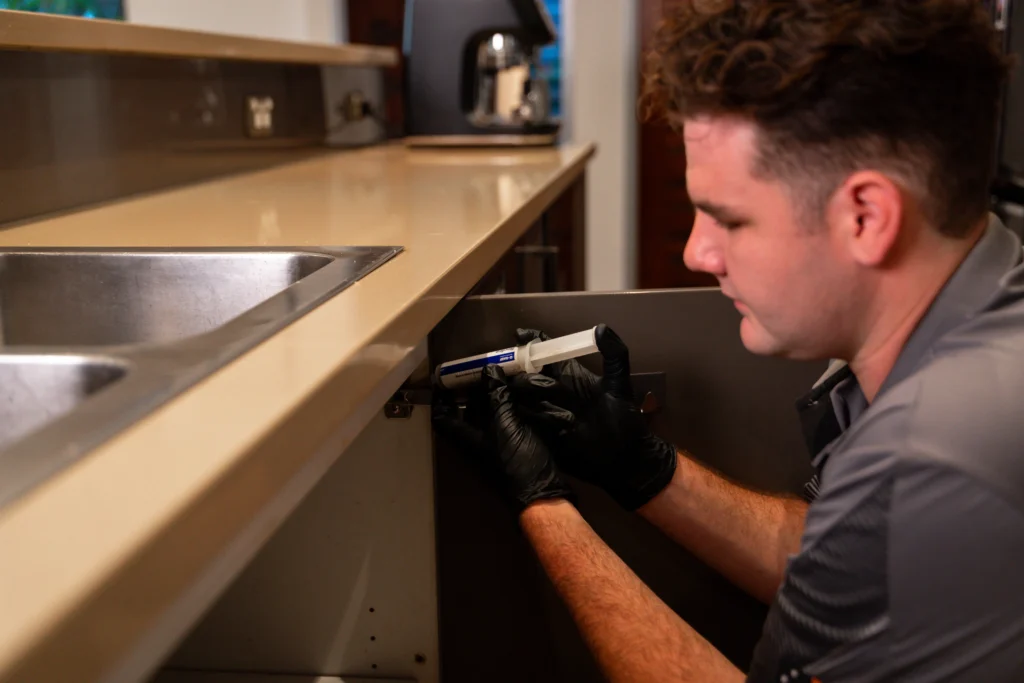
Ants in the Top End
Australia has a very high diversity of ant species. Many of these turn up in Top End homes at some point.
The species you are most likely to encounter in a Darwin home is the Coastal Brown Ant. They are small, light to mid-brown, and they love water. You will find them around kitchen sinks, bathtubs, kettles, dishwashers, and under potted plants. They build nests in soil, wall cavities, sub-floors, and pavement cracks, and they send long foraging trails across hard surfaces toward food and moisture.
Other species commonly found in Australian homes include Bull Ants, Garden Ants, Argentine Ants, Pavement Ants, Black House Ants, Ghost Ants, and Pharaoh Ants. Most of what we treat in Darwin homes is Coastal Brown.
Ant Species
Ants you'll see around Darwin
If you are unsure what species you have, take a close-up photo and send it to us. Species ID matters because the right treatment depends on it.
Coastal Brown Ant
Small (about 2 to 3 mm), light to mid-brown, often seen in long single-file trails on benchtops, walls, and floor edges.
Singapore Ants
About 1.8-3 mm, dark brown/red. Forms long trails along walls, floors electrical equipment
Black House Ant
About 2-3 mm, black, attracted to sweet foods. Common in wall cavities, paths and gardens.
Ghost Ant
About (1.3-1.5 mm). Tiny with transparent abdomen hard to see against light surfaces. Often nest deep in wall cavities and split into multiple colonies when disturbed. Found in wet areas in homes.
Green Ants
About (5-10 mm). Green abdomen with orange body. Habitat garden area in trees, shrubs. Build a nest by pulling leaves together. They bite. Problem ant for gardeners.
Trails
Long lines of ants moving in both directions between a food or water source and a nest.
Nests
Small piles of fine soil/sand around pavement cracks, garden edges, retaining walls, or sub-floor vents.
Winged ants indoors
Reproductive flights happen seasonally. If you see flying ants inside, especially after rain, the nest is likely close. Note: flying termite reproductives can look similar; if you are unsure, do not disturb the activity and call us first.
Persistent return after spraying
If you have already sprayed the trail and the ants are back within a day or two, you are dealing with the symptom, not the colony.
Frass and debris
Bits of soil, dead ants, and discarded wing fragments around skirting boards, window frames, or wall cracks.
Action Plan
What to do if you have ants
Don't blanket-spray the trail
Surface sprays kill the ants you can see and trigger the colony to send more foragers from a different angle. They do not solve the problem.
Note where the trail enters and exits
That tells us where the nest is likely to be. A photo of the trail and the entry point speeds up species ID and treatment planning.
Book a treatment
We treat the nest, not just the trail. On our package treatments we include a 3-month ant-free service period as standard.
Northern Rock Can Help
Cockroaches, Ants & Spiders
Rural areas may incur a small additional travel and access charge. Remote areas require a custom quote.
Cockroaches, Ants & Spiders
Rural areas may incur a small additional travel and access charge. Remote areas require a custom quote.
Senior & Defence Discount
Questions
Common questions about ants around Darwin and the Top End.
Why do ants return shortly after I spray the trail?
What are the key differences between ants and termites?
How long does a professional ant treatment last?
What attracts ants to kitchens in Darwin homes?
Do ants nesting in walls cause structural damage?
Is professional ant treatment safe for pets and children?
Ant problems?
Top End conditions favour ants year-round: warmth, humidity, and seasonal moisture flushes that drive colonies indoors. Most Darwin homes will have ant pressure at some point regardless of how clean the kitchen is.